
How Should Buyers Check a Butterfly Valve Factory?
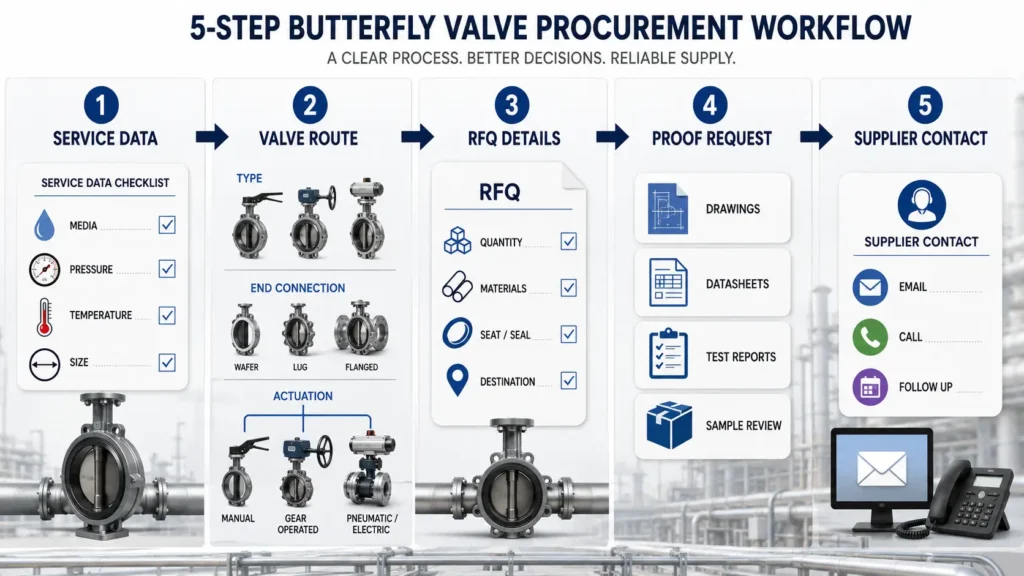
Check a butterfly valve factory by starting with your service conditions. Then review valve type, pipe connection, seat and seal needs, actuator setup, documents, and RFQ process. Before you compare price, prepare media, size, pressure, temperature, quantity, destination, and document needs. Ask the supplier which drawings, data sheets, test records, and certificate details apply to your valve and order.
Step 1: List Service Conditions First
Many buyers ask for “butterfly valve price” too early. The factory still needs basic service data before it can discuss the right valve path.
Start with the conditions around the valve. Write down the fluid or gas, pressure, temperature, size, pipe connection, valve duty, site limits, and any document needs.
Service Details to Send
- Media: water, air, gas, oil, steam, chemical fluid, slurry, or wastewater.
- Pressure and temperature: normal values plus any high or low limits.
- Size and connection: DN, NPS, inch size, flange type, or pipe standard.
- Valve duty: isolation, flow control, throttling review, or another job.
- Actuator need: manual, gear, pneumatic, electric, or “not sure.”
- Documents: drawing, data sheet, test record, certificate details, or packing papers.
Step 2: Check the Factory Against Your Project
A good supplier review uses direct questions. Ask what the factory can discuss for your valve type, service conditions, drawing needs, and order documents.
| Check area | What to ask | Why it matters |
|---|---|---|
| Valve route | Which butterfly valve types fit this request? | The route affects body style, seat, actuator, and documents. |
| Service review | Which service details do you need before a quote? | Media, pressure, and temperature guide the review. |
| Connection | Which pipe or flange details should I send? | Connection data helps avoid a wrong body style. |
| Materials | Which body, disc, stem, seat, or seal data do you need? | Material choices depend on the service and project spec. |
Step 3: Check Drawings, Documents, and Order Support
After you ask product questions, check how the supplier handles files and order details. This helps your team review the quote with fewer gaps.
| Check area | What to ask | What to request |
|---|---|---|
| Drawings | Can you review my drawing or valve schedule? | Size drawing or product data sheet. |
| Actuator | What data do you need for manual, pneumatic, or electric operation? | Actuator notes and control details. |
| Documents | Which documents can support this valve or order? | Data sheet, test record, certificate details, or O&M file if needed. |
| Shipment | Which packing or export details should I send? | Destination, labels, packing notes, and shipping papers. |
Step 4: Compare Body Routes Before RFQ
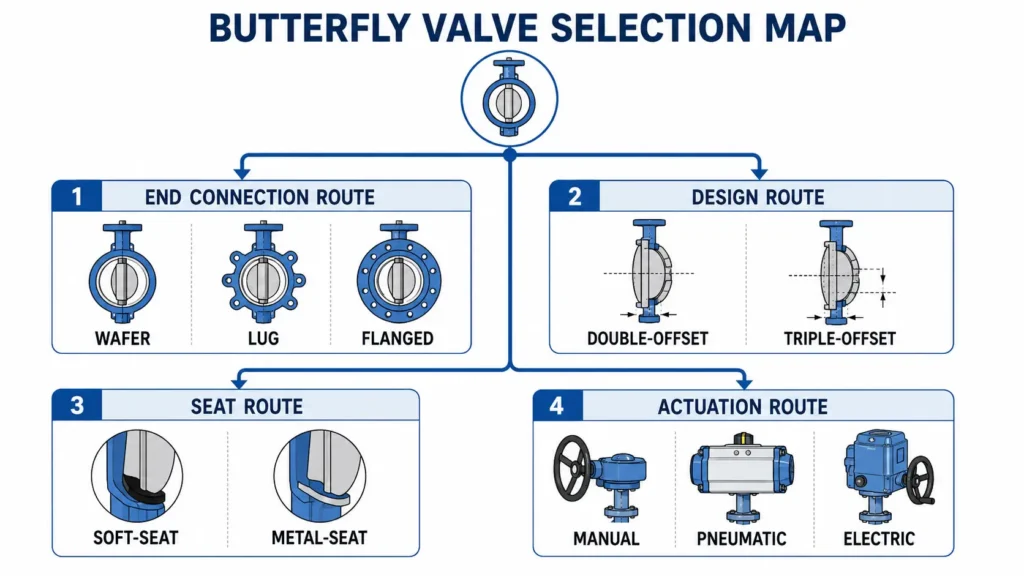
Do not send a quote request with only the words “butterfly valve.” A better RFQ names the body or connection route when you know it.
For product-route browsing, you can review the XHVAL Butterfly Valve page. Use it as a starting point, then confirm the exact valve setup through quote talks.
| Route | Buyer should confirm | Risk note |
|---|---|---|
| Wafer butterfly valve | Flange type, bolts, pipe alignment, and space. | Do not assume it fits every flange or pressure basis. |
| Lug butterfly valve | Lug design, bolting method, pressure basis, and service plan. | Do not assume dead-end service without project review. |
| Flanged butterfly valve | Flange standard, face-to-face size, layout, and bolt pattern. | Check size and project spec before order talks. |
Step 5: Compare Design, Seat, and Actuator Routes
Design, seat, and actuator choices affect how the factory reviews your request. Share the service data first, then ask which route fits the project spec.
| Route | Buyer should confirm | Risk note |
|---|---|---|
| Double-offset valve | Service duty, seal needs, and operating conditions. | Do not treat offset design as a broad promise. |
| Triple-offset valve | Sealing route, pressure, temperature, duty, and documents. | Discuss it when the project spec points to this route. |
| Soft-seat valve | Media, temperature, pressure, and seat fit. | Do not assume material fit without review. |
| Metal-seat valve | Temperature, pressure, wear, and seal needs. | Confirm fit with service data and supplier input. |
| Manual, pneumatic, or electric operation | Access, power or air supply, control signal, and site space. | Confirm actuator setup before order talks. |
Step 6: Prepare RFQ Basics
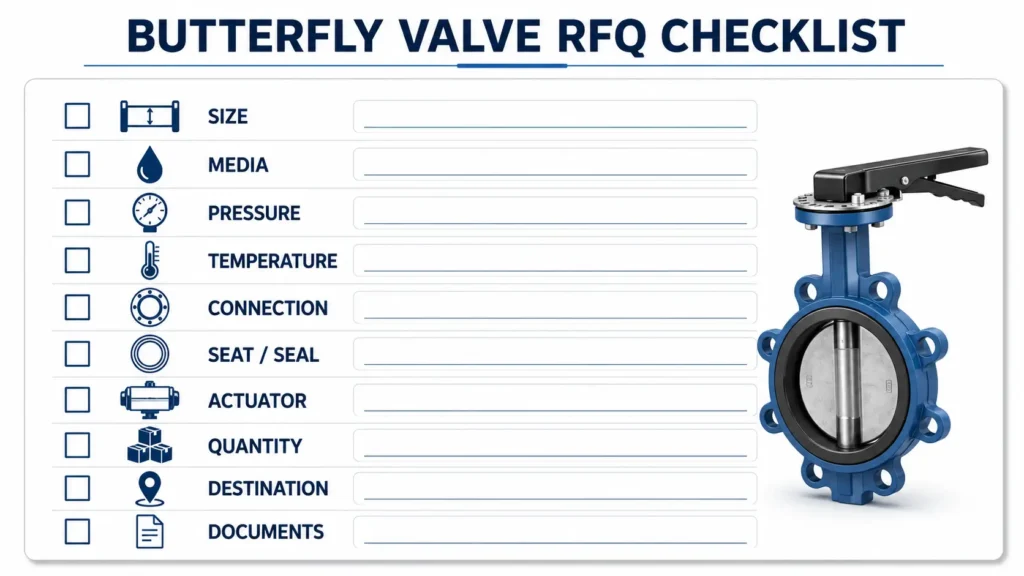
An RFQ works better when you send clear data. You do not need every answer before you contact a supplier, but you should give enough detail to guide the first review.
- Valve type or expected route.
- DN, NPS, or inch size.
- Pressure or rating basis.
- Temperature range.
- Media or service fluid.
- Pipe connection or flange standard.
Step 7: Add Commercial and Document Details
After the technical basics, add order and file needs. These details help the supplier understand the full request.
- Body, disc, stem, seat, or seal preference if your team already has one.
- Manual, gear, pneumatic, or electric actuator need.
- Valve duty, such as isolation or flow control review.
- Quantity and project phase.
- Destination country, port, or plant location.
- Drawing, data sheet, test record, certificate details, or packing paper needs.
Mid-Article CTA: Send a Clear RFQ
Preparing a butterfly valve RFQ? Send valve type, size, media, pressure, temperature, connection, seat or seal needs, actuator needs, quantity, destination, and document needs through the XHVAL contact page for quote talks.
Step 8: Ask for Proof When Claims Matter
Some claims affect buying risk. Do not rely on broad marketing words alone. Ask the supplier to show current proof for the valve and order scope.
- Certificates or standards claims.
- Test or inspection records.
- Material fit or safety claims.
- Lead time, MOQ, or delivery claims.
- Warranty, capacity, customer, or case claims.
- Performance or cost-saving claims.
Step 9: Use XHVAL Pages During Supplier Review
Use XHVAL pages as public product and contact resources. Do not treat a page as proof of final fit for a specific order.
- Use the XHVAL Butterfly Valve page to browse product routes.
- Use the XHVAL Contact page to send service data, RFQ details, and document needs.
- Review any download file manually before you rely on it for a model, spec, or order.
FAQ: How Do I Choose a Butterfly Valve Factory?
Choose a butterfly valve factory by checking product route, service review, RFQ process, and documents. Prepare media, size, pressure, temperature, connection, actuator needs, quantity, and document needs before you compare suppliers.
FAQ: What Should I Send for a Butterfly Valve Quote?
Send valve type, size, pressure, temperature, media, connection, material or seat needs if known, actuator needs, quantity, destination, drawing needs, and document needs. A short product name alone gives the supplier too little context.
FAQ: Which Butterfly Valve Types Should I Compare?
Compare wafer, lug, and flanged body routes; double-offset, triple-offset, soft-seat, and metal-seat routes; and manual, pneumatic, or electric operation. The right route depends on service data and project spec.
FAQ: What Is the Difference Between Wafer and Lug Butterfly Valves?
Wafer and lug valves use different connection routes. Buyers often discuss wafer valves for compact flange-between setups. Buyers review lug valves when bolting method and service plan matter. Check the pipe layout and pressure basis before you choose.
FAQ: When Should I Discuss a Triple-Offset Butterfly Valve?
Discuss a triple-offset butterfly valve when project specs point to an offset or metal-seat route, or when sealing route, pressure, temperature, duty, and documents need closer review. Do not treat it as an automatic upgrade.
FAQ: What Documents Should I Ask a Factory For?
Ask about the documents your project needs. Common examples include a data sheet, size drawing, material document, test or inspection record, certificate details, O&M file, packing list, and export papers.
FAQ: Which Seat or Seal Material Should I Choose?
Seat or seal choice depends on media, pressure, temperature, corrosion risk, wear risk, and valve duty. Share the service data with the supplier and ask why the suggested seat or seal route fits your project.
FAQ: What Factory Claims Need Proof?
Ask for proof when a claim mentions certificates, standards, testing, material fit, safety, lead time, MOQ, capacity, warranty, customer cases, performance, or cost savings. Treat these points as review items before you buy.
Contact XHVAL With Your Butterfly Valve RFQ Details
A clear RFQ helps the supplier review your request. Prepare valve type, size, media, pressure, temperature, connection, actuator needs, quantity, destination, drawing needs, and document needs.
Review the XHVAL Butterfly Valve page for product-route information. Then contact XHVAL with your service data and RFQ details through the XHVAL contact page.